
Are you willing to accept the truth about the Bible and church history? What is the Church? Does the Continuing Church of God meet the Vatican's written requirements for being a church? What is the most common name of the church in the New Testament? Are Christians supposed to contend for the original faith or one that (according to Benedict XVI) which resulted in "an irreversible turn" by people like Origen of Alexandria? Do you have sufficient "love of the truth" (2 Thessalonians 2:10) to "prove all things and hold fast that which is good" (1 Thessalonians 5:21)? Where were believers first called Christians? Does the Bible call the church holy? Did second century writers often use the expression Church of God? When do we first see the use of the expression "catholic church"? Was the original "catholic church" used in relationship to Rome or Smyrna of Asia Minor? What do we learn from the writings of Ignatius of Antioch and the 'Martyrdom of Polycarp' (written by the Smyrnaeans)? When Pionius of Smyrna used the referred to the Catholic Church could that have been a reference to Rome or the 'Eastern Orthodox' church in Alexandria? In the early third century were Asia Minor and Antioch in fellowship/communion with the major churches in Rome and Alexandria? Did the Nazarenes that Jerome and Epiphanius wrote of accept the Councils of Nicea and Constantinople which were convened by Roman emperors (including the unbaptized Emperor Constantine)? Did anyone ever write of the "Catholic Church of God"? Did Church of God Christians use the term "catholic church" throughout history, even after Emperor Theodosius restricted it and called them insane and madmen? Is the Continuing Church of God like the Protestants or does the Continuing Church of God really have ties to the original apostles? Dr. Thiel addresses these subjects and more.
A free online book of related interest is available titled "Beliefs of the Original Catholic Church" URL: https://www.cogwriter.com/Original-Ca...
Sermon Series related to the book above:

LATEST SERMONS
Will God offer salvation to all that ever lived or just the called of this age? Are there hundreds of scriptures that many have overlooked or misunderstood that teach the truth about God's loving
What is truth? Truth is a mystery to most. Are there absolute truths? Richie White teaches about truth from the free eBook 'Mystery of God's Plan, Why Did God Create Anything, Why Did God
In this sermon, Dr. Thiel answers questions audience members wrote down. He did not see any of the questions until he reads them and then tries to answer them in this video. Questions included
John Shackleton discusses the use of scripture to understand doctrine, but that others do not understand them. He explains, based on scriptures associated with the birth of John the baptizer,
The first commandment is the one broken the most. What does the first commandment state? Was it applicable before Mount Sinai or after Jesus' resurrection? Does God expect His people to love
Is God’s existence logical? Can His existence be proven? Can the theory of evolution be disproven? Louis Rubin answers these questions and more.
Are we as Christians preparing or qualifying for our future roles as kings and priests with Jesus Christ? Is one more important than the other? Chad Branton answers these questions and goes
Nepos of Arsinoe Egypt was a third century bishop/overseer who wrote something called the 'Refutation of the Allegorizers.' He stood against the allegorical approach to scripture that people
When the Apostle John saw the Apocalypse, he was inspired to write about a coming 1000 year period where Jesus and the saints were to reign. This thousand year time is often referred to as the
What is the Feast of Tabernacles? Is it commanded in the Bible? Was it kept be early Christians? Can it be kept in places other than Jerusalem? Did Jesus and the Apostle Paul keep it? What does
John Shackleton discussed obeying God and giving offerings. And pointed to scriptures related to giving and God blessing the government. Offerings can be mailed to the Continuing Church of
Dr. Thiel gave the opening night message for the Feast of Tabernacles in Brisbane, Australia. In it, he went over some aspects of church history, restored truths, being a living sacrifice, what the
What is the connection between the Day of Atonement and the Jubilee? How often was a Jubilee year to be proclaimed? Has the Jubilee to involve release from debt and bondage? Was the Jubilee
Should an offering be taken up on the Day of Atonement? What does the Bible teach about that? Steve Dupuie discusses this.

James Martenet gave this sermon about love and who is your neighbor. In addition to living in such a way as to let your light shine, Christians should also take actual physical steps. That includes obeying

This is a September 2026 sermon related to the Feast of Trumpets. On the Feast of Trumpets in 1979, the late John Ogywn gave a sermon titled 'The Meaning of the Feast of Trumpets.' But this was

Did ancient Israelites take give an offering, or at least a portion, on the Feast of Trumpets? Are God's leaders to lift up their voices like a trumpet and decry the sins in their land? Has the Continuing
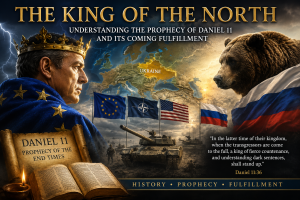
Is there a coming 'King of the North'? If so, is the King of the North from Europe or Russia? What does the Bible show? What are some connections with this Beast and the European Union? Did Jerome
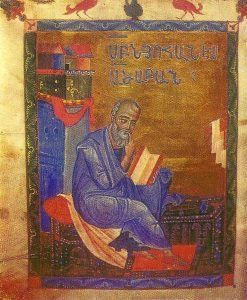
This is the third part of a three-part sermon series covering the letters, also called epistles, of 1, 2, & 3 John. In this sermon, Dr. Thiel goes over every verse in 2 John and 3 John, as well as the portions of 1
This is the second part of a three-part sermon series covering the letters, also called epistles, of 1,2, & 3 John. In this sermon, Dr. Thiel goes over every verse in 1 John chapters 4 and 5. Topics include
John is believed to have written this book, also called a letter or epistle around 90 A.D. This is the first part of a three-part series by Dr. Thiel where he intends to go over every verse in 1, 2, & 3 John.