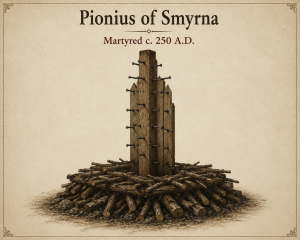
(ChatGPT illustration of Roman Gibbet/Gallows)
Pionius was a presbyter in Smyrna of Asia Minor. He is believed to have written down, or more likely simply copied, a document called 'The Life of Polycarp' which showed that the Apostle Paul and Polycarp revered scriptures, kept the Sabbath, and taught Gentiles to keep the biblical Holy Days. In the mid-3rd century, Roman Emperor Decius issued an empire-wide edict requiring his subjects to sacrifice to the pagan gods and himself, and eat 'forbidden meats' (εἰδωλόθυτα) from the sacrifice. Pionius, and his companions (Sabina and Asclepiades) refused to do so. Roman authorities pleaded with them to do the sacrifice and eat the 'forbidden foods,' yet they refused. The authorities even pointed to Eudaemon (also spelled Euctemon), who had been the Bishop of Smyrna, who compromised, sacrificed, and then worshiped the goddess Nemesis, but Pionius refused. Some of what happened brought back memories of those who accept the Tkach apostasy when pagan traditions were pushed in the changed Worldwide Church of God. Pionius and his companions wanted to set a bold example of faithfulness. Pionius also spoke and was able to silence various critics like Jesus said would happen (cf. Luke 21:12-15). He and his companions said they were Christians, part of the catholic church, as opposed to the Marcionites and those of the Greco-Roman confederation that changed Passover from the night of the 14th to a Sunday morning. Pionius gave various testimonies, explained why punishing Christians was unjust, and even explained that the witch at Endor did not raise the seer Samuel for King Saul. Despite various pressures, Pionius and his companions would not compromise and eat the at least spiritually unclean meat, even when tortured (and one threatened with forced prostitution). Instead they suffered persecution, endured to the end, and were martyred. They stand as an example to the faithful as deadly persecutions are again coming per Daniel 11:31-35 and Mark 13:11-13. Dr. Thiel covers these matters in this sermon, while also explaining aspects of the apostolic succession in the Continuing Church of God and briefly covering some of the beliefs of the early catholic church in Smyrna that the Greco-Roman Catholics and most Protestants do not hold.
Here is a link to a related article titled 'Pionius of Smyrna: Faithful during Apostasy and Martyrdom' URL: Pionius of Smyrna